Refrigerated Van Temperature Guide: What Setting for Which Cargo?
Set a refrigerated van too warm and your cargo spoils. Set it too cold and you can damage produce, crack chocolate or freeze goods that were meant to stay chilled. The right temperature isn’t one number — it depends on what you’re moving.
This guide gives you the correct cold-chain temperature for the most common cargo types in the UAE, and the right vehicle to hold it.
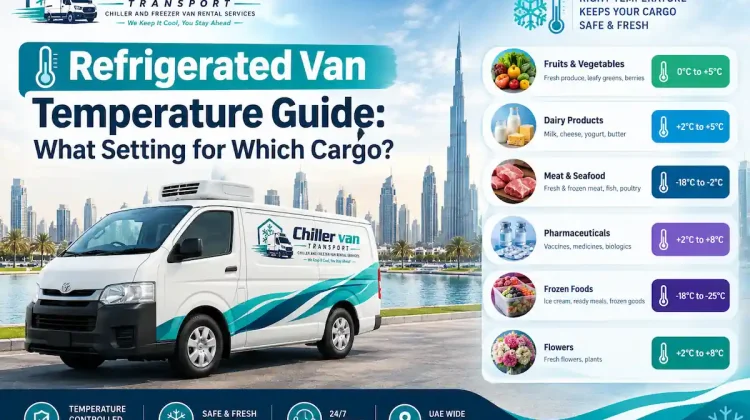
Quick Reference Table
| Cargo | Target temperature | Right vehicle |
|---|---|---|
| Fresh fruit & vegetables | +2°C to +8°C | Chiller van |
| Dairy (milk, cheese, yogurt) | 0°C to +4°C | Chiller van |
| Fresh meat & poultry | 0°C to +4°C | Chiller van |
| Fresh fish & seafood | 0°C to +2°C | Chiller van |
| Beverages & juices | +2°C to +8°C | Chiller van |
| Cut flowers | +2°C to +5°C | Chiller van |
| Pharmaceuticals (standard) | +2°C to +8°C | Chiller van |
| Frozen meat & seafood | −18°C or colder | Freezer van |
| Ice cream & frozen desserts | −20°C to −25°C | Freezer van |
| Frozen ready meals | −18°C or colder | Freezer van |
| Mixed chilled + frozen loads | Chilled 0°C to +8°C + frozen −18°C to −25°C (separate compartments) | Dual-zone van or truck |
| Bulk chilled cargo | 0°C to +8°C | Chiller truck |
| Bulk frozen cargo | −18°C to −25°C | Freezer truck |
The Two Temperature Zones, and Carrying Both
Almost every cargo falls into one of two temperature zones, chilled or frozen, and each has its own vehicle. When you carry both at once, a dual-zone vehicle handles them together.
1. Chilled: 0°C to +8°C
This is the largest category. A chiller van holds a steady 0°C to +8°C, which covers most fresh food, beverages, flowers and standard pharmaceuticals. For large chilled loads — supermarket distribution, hotel supply, wholesale — a chiller truck gives you the same range with full pallet capacity.
2. Frozen: −18°C to −25°C
Frozen goods must stay at −18°C or colder — the point at which bacterial growth effectively stops. A freezer van maintains −18°C to −25°C for frozen meat, seafood and ice cream. For bulk frozen distribution and long-haul runs, a freezer truck does the same at scale.
3. Chilled + Frozen Together: Dual-Zone
Carrying chilled and frozen goods on the same run? A dual-zone refrigerated van has two separately insulated compartments, one held at 0°C to +8°C and the other at −18°C to −25°C, so both loads travel together without compromise. For bulk mixed loads, a dual-zone truck does the same at full pallet capacity.
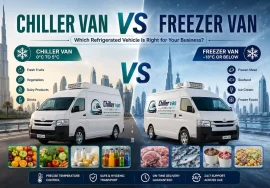
Not sure whether you need chilled or frozen? Our guide on chiller van vs freezer van breaks it down.
Cargo-by-Cargo Guide
Fresh fruit and vegetables — +2°C to +8°C
Most produce keeps best between +2°C and +8°C. But be careful: some tropical produce — bananas, tomatoes, cucumbers, mangoes — suffers chilling injury below about +10°C, turning soft and discoloured. If you’re moving sensitive tropical goods, tell us and we’ll set the van accordingly.
Dairy — 0°C to +4°C
Milk, cheese and yogurt need a tight 0°C to +4°C. Dairy is one of the most temperature-sensitive cargoes — even a short spell above +4°C shortens shelf life significantly. A pre-cooled chiller van set at the lower end of its range is ideal.
Fresh meat and poultry — 0°C to +4°C
Fresh (unfrozen) meat and poultry must stay at 0°C to +4°C, with poultry ideally at the colder end. Keep it separated from other cargo to avoid cross-contamination, and minimise door openings on the route.
Fresh fish and seafood — 0°C to +2°C
Fresh seafood is the most demanding chilled cargo. It needs 0°C to +2°C — as close to freezing as possible without freezing — and it should travel on ice. Use a chiller van set to its coldest setting.
Beverages and juices — +2°C to +8°C
Soft drinks, juices and water are forgiving, but fresh juices and dairy-based drinks need proper chilling to stay safe and fresh. +2°C to +8°C is the standard range.
Cut flowers — +2°C to +5°C
Most cut flowers last longest at +2°C to +5°C, which slows respiration and wilting. Tropical flowers (orchids, anthuriums) are the exception and prefer +10°C to +15°C. Florists and event companies rely on chiller vans for exactly this.
Pharmaceuticals and vaccines — +2°C to +8°C
The standard pharmaceutical cold chain is +2°C to +8°C, with strict, continuous monitoring. Some products need frozen or ultra-cold storage. For pharma, temperature logging matters as much as the temperature itself — every one of our vehicles records the full journey.
Frozen meat and seafood — −18°C or colder
Once frozen, meat and seafood must never rise above −18°C. Any thaw-and-refreeze cycle damages texture and safety. A freezer van holds −18°C to −25°C reliably, even in UAE summer heat.
Ice cream and frozen desserts — −20°C to −25°C
Ice cream is the hardest frozen cargo. It needs −20°C to −25°C to stay firm — at −18°C it begins to soften and form ice crystals. Always ask for the coldest setting and a pre-cooled vehicle.
A note on chocolate and confectionery
Not everything wants to be cold. Chocolate is best at a cool +15°C to +18°C — refrigerating it causes “bloom” (a white, chalky surface). If you’re moving chocolate in the UAE heat, you need a controlled, cool environment rather than a deep chill. Ask us about the right setting.
Five Rules for a Safe Cold Chain
- Pre-cool the vehicle before loading. Never load warm cargo into a warm van and expect it to catch up.
- Don’t overload. Cold air must circulate around the cargo. Packed-solid loads develop warm spots.
- Minimise door openings. Every open door lets heat in — plan routes to reduce stops where possible.
- Separate cargo types. Keep raw meat away from ready-to-eat goods; keep frozen and chilled apart unless the vehicle is dual-zone, with a separate compartment for each.
- Log the temperature. Continuous monitoring proves the cold chain held — essential for HACCP compliance and for your customers’ peace of mind. Compliance means proving it too — see our guide to HACCP & cold chain compliance in the UAE.
Get the Right Vehicle at the Right Temperature
Every Chiller Van Transport vehicle is HACCP-compliant, GPS-tracked and temperature-monitored, and we pre-cool it to your exact requirement before dispatch. Tell us what you’re moving and we’ll set it right.
We serve all seven UAE emirates, 24/7. Call +971 50 352 2176 or message us on WhatsApp for a free quote.
Frequently Asked Questions
What temperature should a refrigerated van be for food?
It depends on the food. Chilled foods such as dairy, fresh meat and produce need 0°C to +8°C, with dairy and meat at the colder 0°C to +4°C end. Frozen foods must stay at −18°C or colder, and ice cream needs −20°C to −25°C.
Can one van carry both chilled and frozen goods?
Yes, if it’s a dual-zone van. A dual-zone vehicle has two separately insulated compartments, one held at chilled 0°C to +8°C and the other at frozen −18°C to −25°C, so both loads travel together safely. For bulk mixed loads, a dual-zone truck does the same at scale. If you only carry one type per run, a dedicated chiller van or freezer van is simpler and more efficient.
Why is my ice cream soft even in a freezer van?
Ice cream needs −20°C to −25°C, colder than the standard −18°C frozen threshold. Ask for the coldest setting and make sure the vehicle is pre-cooled before loading.
Does the UAE heat affect refrigerated vans?
Our vehicles are built for the region’s heat, with heavy-duty insulation and powerful refrigeration units that hold the set temperature even in summer. Pre-cooling and minimising door openings help maintain it on every route.
Do you monitor the temperature during transport?
Yes. Every vehicle is fitted with real-time temperature logging and GPS tracking, giving you a complete record of the journey — essential for HACCP compliance and food safety audits.