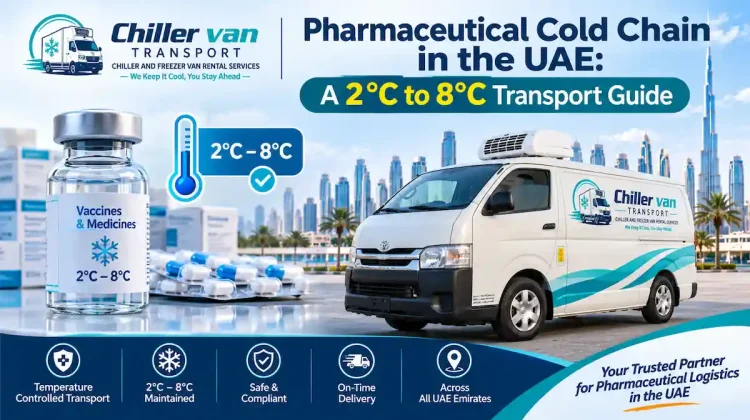
Pharmaceutical Cold Chain in the UAE: A 2°C to 8°C Transport Guide
Medicines are some of the most temperature-sensitive cargo on UAE roads. Vaccines, insulin and many biological products must stay between 2°C and 8°C from the warehouse to the pharmacy shelf, and in a country where summer temperatures pass 45°C, that is a real challenge.
This guide explains how the pharmaceutical cold chain works in the UAE: the temperature ranges that matter, who regulates medicines, what Good Distribution Practice (GDP) expects from transport, the questions to ask a transport provider, and practical tips for moving medicines safely.
The quick answer:
- Most cold-chain medicines → 2°C to 8°C, and they must never freeze. A chiller van set in the middle of that range, around 5°C, is the usual choice.
- Frozen medicines → a freezer van at −18°C to −25°C, but only if that sits inside the range on the product label
- Ultra-cold products (below −60°C) → specialist shippers with dry ice, not a standard refrigerated vehicle
- Licensed distributors → GDP applies, so your transport has to meet the requirements you set
Why Medicines Need a Stricter Cold Chain Than Food
The damage is invisible. Warm milk smells off. A vaccine that has been too warm or frozen looks exactly the same, but it may no longer work.
Freezing is as dangerous as heat. Many 2°C to 8°C products, including insulin, many vaccines and biologics, are damaged if they freeze. Too cold is a failure, not a safety margin.
Proof matters. In pharma, it isn’t enough that the temperature held. You need records that show it held, for every shipment.
The UAE climate is unforgiving. The inside of a parked vehicle in summer gets far hotter than the air outside. Every minute with the doors open, or waiting at a loading bay, puts the cargo at risk.
Temperature Ranges in Pharmaceutical Transport
| Range | Typical products | Transport |
|---|---|---|
| 2°C to 8°C (refrigerated) | Vaccines, insulin, many biologics | Chiller van set within the 2°C to 8°C range |
| Around −25°C to −15°C (frozen) | Some vaccines and biological products | Freezer van, if −18°C to −25°C fits the label range |
| Below −60°C (ultra-cold) | Some advanced therapies | Specialist shippers with dry ice |
| 15°C to 25°C (controlled room temperature) | Many tablets, syrups and creams | Temperature-controlled transport. A plain van in a UAE summer can go far above 25°C. |
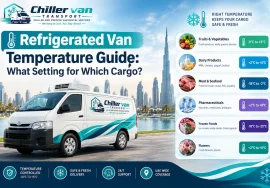
Always follow the storage range printed on the product or its documentation. For a wider list covering food and other cargo, see our refrigerated van temperature guide.
Who Regulates Medicines in the UAE?
- Federally, medicines and pharmaceutical establishments are regulated by the Emirates Drug Establishment (EDE). Under Federal Decree-Law No. 38 of 2024, in force since January 2025, these responsibilities moved to EDE from the Ministry of Health and Prevention (MOHAP).
- Licensed pharmaceutical establishments are expected to follow Good Distribution Practice (GDP) for how medicines are stored and distributed.
- At emirate level, the Dubai Health Authority (DHA) and Abu Dhabi’s Department of Health (DoH) regulate healthcare facilities in their emirates, and MOHAP covers the northern emirates.
Regulations change, so confirm the current requirements for your products with EDE and your emirate’s health authority. Food has its own rules, which our guide to HACCP & cold chain compliance in the UAE covers.
What GDP Expects From Transport
GDP is a set of standards that protect the quality of medicines during storage and distribution. For transport, the principles are broadly the same everywhere:
- Stay in range for the whole journey. Products must remain within their labelled temperature range from pickup to delivery.
- Suitable, qualified vehicles. Temperature-controlled vehicles should be shown, usually through temperature mapping, to hold the range across the whole cargo area.
- Calibrated monitoring. Temperature sensors and data loggers should be calibrated, with records kept for each shipment.
- A plan for deviations. There should be a clear procedure for what happens if the temperature goes out of range, and who is told.
- Clean and secure. Vehicles must be clean, free of contamination risks and protected against theft or tampering.
- Trained people. Everyone handling the products should understand what they are carrying and why it matters.
- Written agreements. When a licensed distributor outsources transport, the responsibilities should be set out in writing. The distributor stays responsible for the products.
9 Questions to Ask a Refrigerated Transport Provider
- Can the vehicle hold 2°C to 8°C steadily, and what set point will you use?
- Is the temperature recorded continuously, and will I get the record after every trip?
- Are the temperature sensors calibrated, and can you share the certificates?
- Has the vehicle’s cargo area been temperature mapped?
- Is there an alarm if the temperature drifts, and who responds to it?
- Is the vehicle cleaned between jobs and kept away from chemicals and strong-smelling cargo?
- Is the driver trained in handling medicines?
- Is the vehicle GPS-tracked and secured during the journey?
- What happens if the vehicle breaks down? Is there a backup vehicle?
If you’re a licensed distributor, get the answers in writing as part of your transport agreement.
Where Refrigerated Van Rental Fits
Not every pharma movement needs a dedicated fleet. Rental chiller vans are often used for:
- Pharmacies and clinics moving stock between branches
- Distributors that need extra capacity during seasonal peaks, such as flu-vaccine season
- Last-mile deliveries to hospitals, clinics and pharmacies
- Backup while your own vehicle is in maintenance
- Health campaigns and events that need medicines on site
Renting with a driver often makes sense for these jobs, as our guide to chiller van rental with or without a driver explains.
Practical Tips for Moving Medicines in a Chiller Van
- Set the van around 5°C, in the middle of the 2°C to 8°C range. Never set it at 0°C for medicines that must not freeze.
- Pre-cool before loading, so the cargo area is already in range when the first box goes in.
- Use your own calibrated data logger inside the cargo as well as the vehicle’s display, so you have an independent record.
- Keep products in their insulated packaging or validated shippers for extra protection.
- Keep boxes away from the cold air outlet. The air right at the cooling unit can be colder than the set point.
- Keep door openings short and load in delivery order.
- Plan around the heat: early deliveries, the shortest waits at loading bays, and routes that avoid peak traffic. Our guides to refrigerated transport in Dubai and refrigerated transport in Abu Dhabi cover the key areas.
- Never mix medicines with chemicals, and keep them separate from food.
Our Chiller Vans for the Pharmaceutical Cold Chain
Our chiller vans run at 0°C to +8°C, so they can be set within the 2°C to 8°C pharma range, and every vehicle is pre-cooled, GPS-tracked and temperature-logged for the whole journey. If your products fall under GDP, tell us your requirements, such as calibration certificates, mapping data or a written agreement, and we’ll confirm honestly what we can provide before you book.
We serve all seven emirates, 24/7. The booking steps are in our guide on how to rent a refrigerated van in the UAE. Call +971 50 352 2176 or message us on WhatsApp to discuss your pharma cold chain needs.
Frequently Asked Questions
Q1. What temperature should medicines be transported at in the UAE?
Most cold-chain medicines, such as vaccines and insulin, must be kept between 2°C and 8°C and must never freeze. Some products need frozen or ultra-cold storage, and many tablets need controlled room temperature. Always follow the storage range on the product label.
Q2. Can I use a chiller van to transport medicines?
Yes. Our chiller vans run at 0°C to +8°C, so they can be set within the 2°C to 8°C pharma range, ideally around 5°C. For GDP-regulated products, agree your requirements with the transport provider before booking, including temperature records and calibration.
Q3. Who regulates pharmaceutical distribution in the UAE?
Since January 2025, the Emirates Drug Establishment (EDE) has been the federal regulator for medicines and pharmaceutical establishments under Federal Decree-Law No. 38 of 2024. Emirate health authorities such as DHA in Dubai and DoH in Abu Dhabi regulate healthcare facilities locally.
Q4. What is GDP in pharmaceutical transport?
GDP, or Good Distribution Practice, is a set of standards that protect the quality of medicines during storage and distribution. For transport, it covers keeping products in their temperature range, calibrated monitoring and records, procedures for temperature deviations, trained staff and written agreements.
Q5. Why shouldn’t a chiller van be set to 0°C for medicines?
Many 2°C to 8°C medicines are damaged by freezing, and the air near the cooling unit can be colder than the set point. Setting the van around 5°C, in the middle of the range, gives a safe margin on both sides.